


+33 3 89 73 83 83
+33 6 89 33 61 43
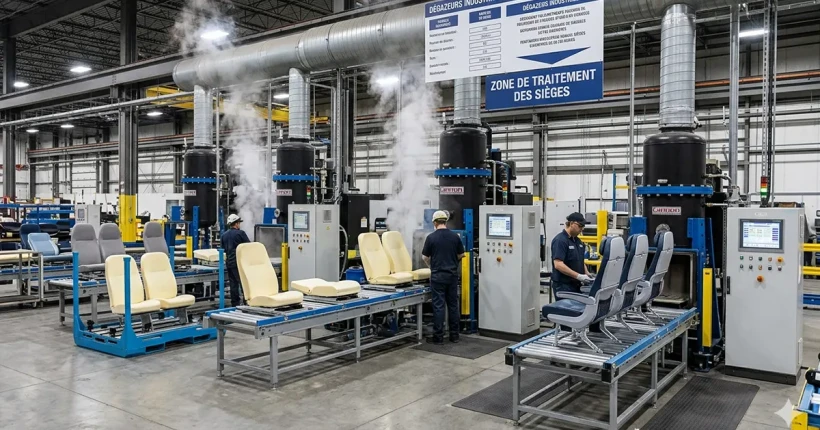
Are bubbles appearing in your polyurethane parts? Are surface defects or production instability affecting your output? In the polyurethane foaming industry, these issues are often linked to insufficient maintenance of degassers for polyurethane molds.
A clogged degassing system can lead to invisible defects, reduced part quality, and a significant drop in overall industrial performance.
A degassing system for foam injection has a simple mission: efficiently evacuate gases at the critical moment of molding. However, without proper maintenance, this function quickly deteriorates.
Without proper maintenance, you may face:
For foam equipment manufacturers, this directly results in lower productivity and increased scrap rates.
A well-designed and properly maintained polyurethane mold degasser can operate for several years without performance loss.
In practice:
The lifespan depends as much on system design as on your operational practices and performance standards.
Maintenance of degassers in the polyurethane foaming industry must be adapted to your production constraints and output levels. Poorly adapted maintenance is often the root cause of foam injection degassing issues.
To ensure efficient polyurethane foam degassing, your industrial degassing system manufacturer recommends:
Adapt the maintenance of your industrial degassing systems to your production pace, increasing maintenance in high-volume foaming operations.
In most cases, performance loss is gradual. Your industrial degassing expert recommends a weekly visual inspection to detect clogging before it impacts part quality.
The most reliable degassing systems for polyurethane molds are designed for easy maintenance.
Your industrial degassing system supplier prioritizes:
A system that is difficult to clean is rarely properly maintained. That is why your polyurethane mold degasser manufacturer integrates maintenance considerations from the design stage to ensure long-term reliability.
These solutions are used in demanding industrial environments with high production constraints and strict quality requirements. Working with a specialist in degassers for the polyurethane foaming industry means securing your entire process with:
Your degassing system becomes a reliability asset rather than a risk factor.
Certain warning signs should alert you:
These symptoms are common in polyurethane foam production issues and are often linked to inefficient or poorly maintained degassing.
Weekly in high-volume production, with adjustments based on your production rate and process constraints.
Bubbles, surface defects, quality variations, or process instability are immediate indicators.
Yes, especially regular checks of air circuits and pressure levels.
Through regular maintenance, proper cleaning, and a design adapted to production environments.
Regular degasser maintenance, monitoring of pneumatic circuits, and process control help reduce degassing-related defects.
Maintenance of degassers for polyurethane molds is a direct lever for industrial performance. When properly managed, it improves quality, stabilizes processes, and extends equipment lifespan.
Your polyurethane foam degassing expert follows a simple approach: delivering reliable, durable solutions tailored to real production constraints.
If you are facing foam defects or degassing issues in your polyurethane molds, contact a specialized degasser manufacturer to implement solutions adapted to your production environment.
